
Trade School. How a Santa Barbara house is really built.
Every trade that builds a house on the South Coast, taken apart in 3D: what each material is, the kinds you will meet, how it is made, how it is installed well, a hundred years of how it was done here, and what it means for your house. We train our own crew on it. Owners are welcome.
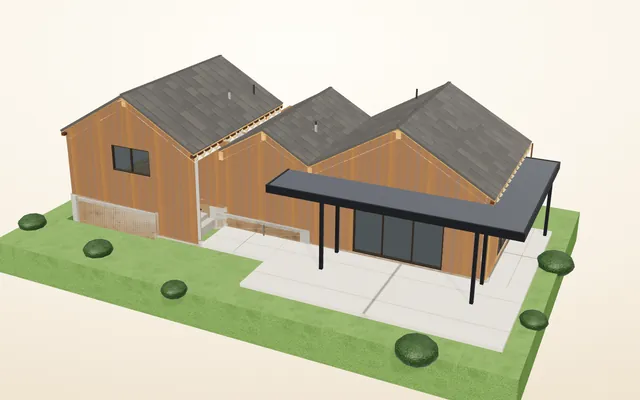
One real ADU, in every course.
Every course ends on the same building: a 710-square-foot ADU on Canon Drive in the Santa Barbara foothills, modelled from its permit set before pricing. Each trade sees its own work on it: the step it arrives at, what is built before it, the inspection, and the questions the drawings left open. 95 stops across 27 courses.
ArchitectureEngineering for buildersBuilding in Santa BarbaraSite and excavationFoundations and concreteMasonry and stoneFramingDemolition and hazardous materialsRoofingWindows, doors and weatherproofingStucco and exterior plasterInsulation and air sealingPlumbingElectricalHeating, cooling and ventilationSolar, batteries and EVFire sprinklers and wildfire hardeningLow voltage and smart homeDrywall and plasterTile and waterproofingCountertops and stone fabricationFloors and paintCabinetry and millworkFinish carpentryIronwork and metalHardscape, drainage and landscapeConstruction project management
Before the trades: the place, design, engineering and the rules
 Course 01New
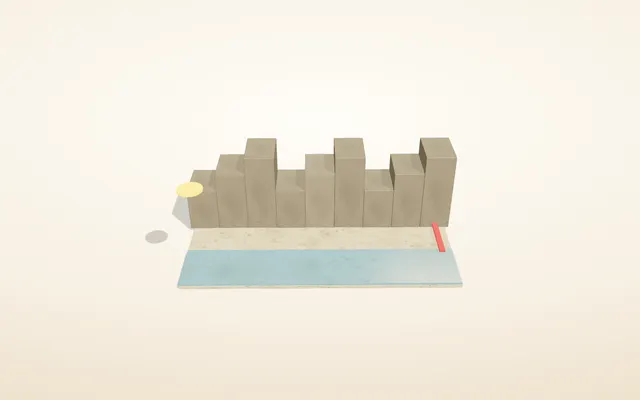
The South Coast: land, history and towns
The sideways range, the sundowner and the water; fire and flood; the Chumash, the Presidio and the Mission; Carpinteria to Solvang.
8 chapters · 50 3D scenes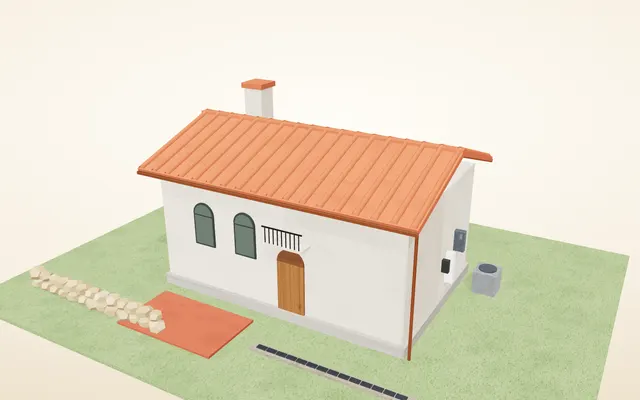 Course 02New
Architecture
Massing, proportion and the classical kit; Spanish Colonial Revival piece by piece; loggias and the Montecito canon.
7 chapters · 38 3D scenes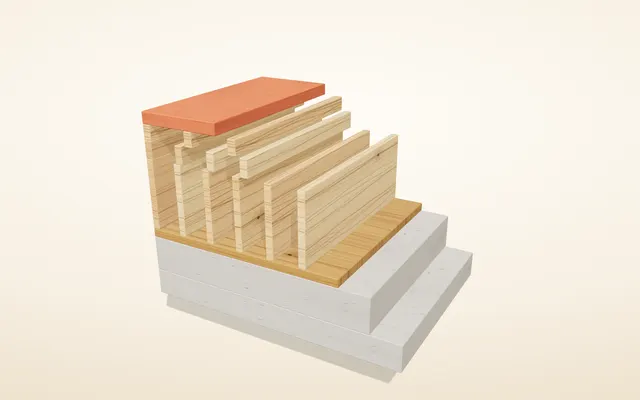 Course 03New
Engineering for builders
Load paths, shear walls and moment frames; stiff floors for stone and heavy roofs; soils, drainage and hydraulics.
7 chapters · 33 3D scenes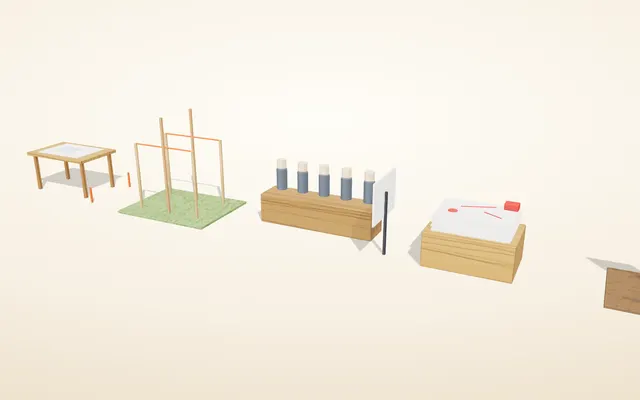 Course 04New
Building in Santa Barbara
Design review, size limits, ADUs and historic houses; the coast, fire zones, debris flows, water and oaks.
7 chapters · 31 3D scenesThe ground and the bones
 Course 05
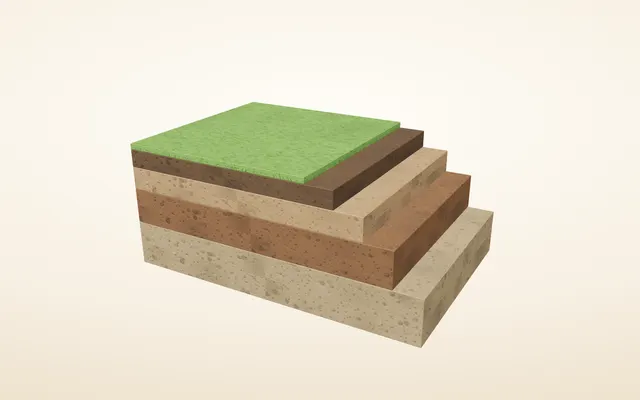
Site and excavation
Soil layers, expansive clay and compaction; shoring for basements; drainage, from horse scrapers to excavators.
7 chapters · 36 3D scenes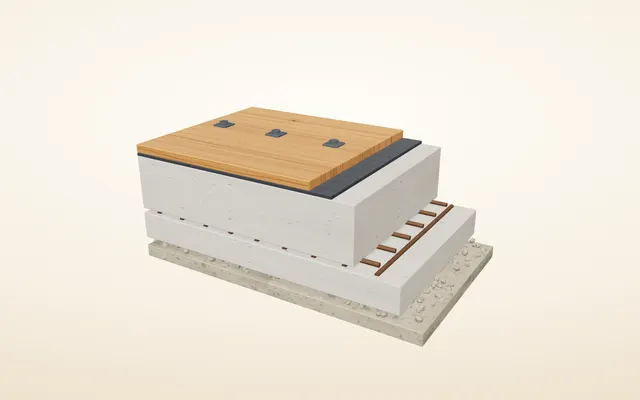 Course 06
Foundations and concrete
Footings, steel and anchor bolts; vapor retarders, waterproofing and underpinning; concrete finishes.
7 chapters · 34 3D scenes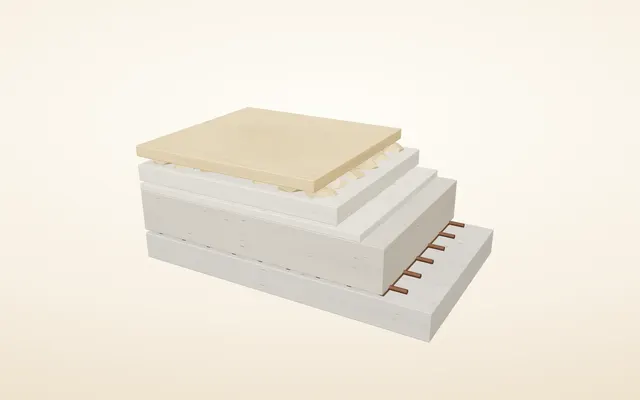 Course 07New
Masonry and stone
Santa Barbara sandstone, block, brick and mortar; cast stone, fireplaces indoors and out; veneer done right.
7 chapters · 35 3D scenes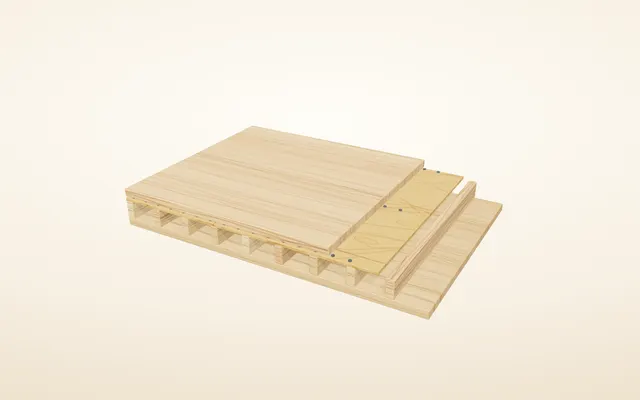 Course 08
Framing
Walls, floors and roofs; shear walls, ledgers and fire blocking; taking out a bearing wall.
7 chapters · 32 3D scenes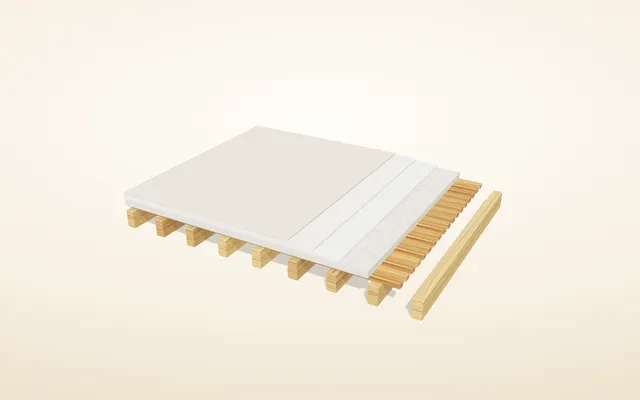 Course 09New
Demolition and hazardous materials
Where asbestos and lead hide, testing, containment, salvage and the 65 percent recycling rule.
7 chapters · 31 3D scenesThe shell that keeps the weather out
 Course 10
Roofing
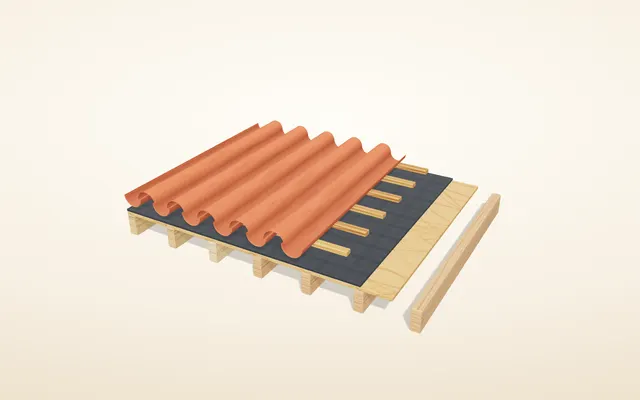
Clay tile, slate and standing seam; underlayment, flashing, valleys and copper; ember-safe eaves.
7 chapters · 36 3D scenes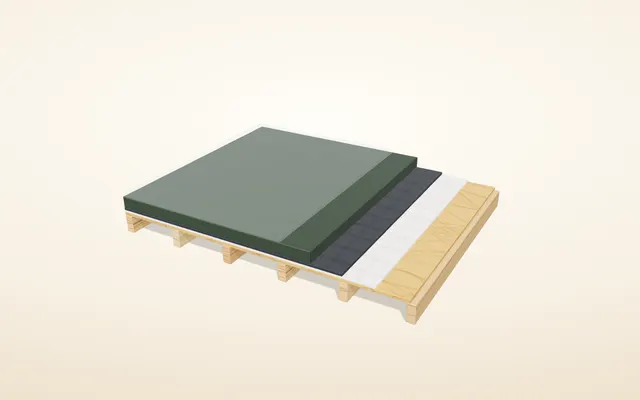 Course 11
Windows, doors and weatherproofing
Sill pans and flashing; steel restoration, pivot doors and big glass; hidden screens and egress.
7 chapters · 37 3D scenes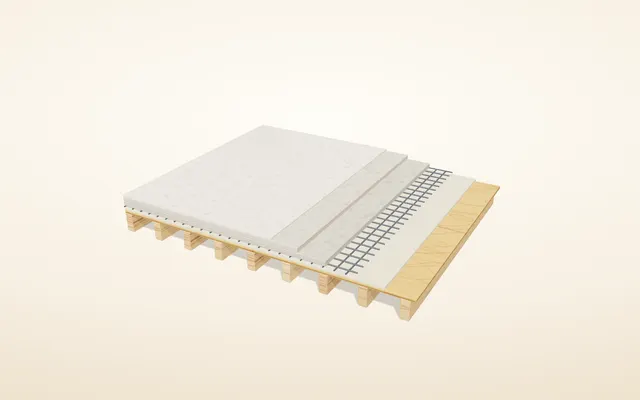 Course 12New
Stucco and exterior plaster
Paper, lath and three coats; weep screeds, rounded corners and deep returns; the smooth Santa Barbara finish.
7 chapters · 31 3D scenes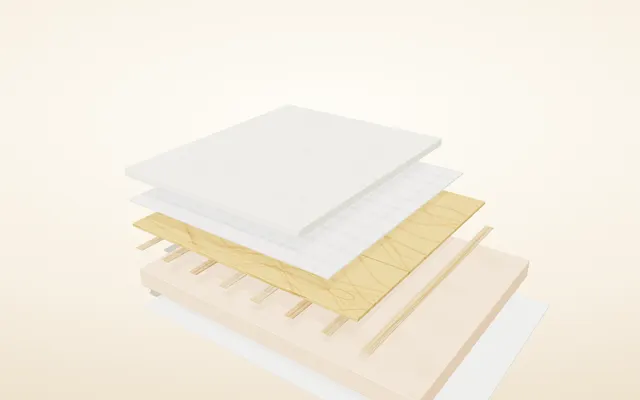 Course 13
Insulation and air sealing
R-value, batts, cellulose and foam; sealed attics, basements and closed walls; blower doors and Title 24.
7 chapters · 32 3D scenesThe systems inside the walls
 Course 14
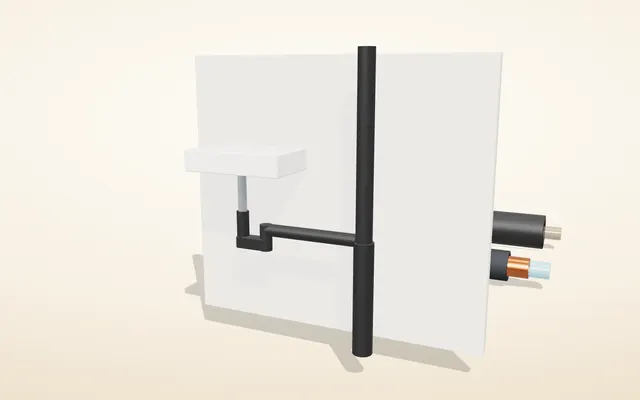
Plumbing
Supply, drains and vents; gas, sewer lateral and water heaters; leak shutoff, water treatment and graywater.
7 chapters · 42 3D scenes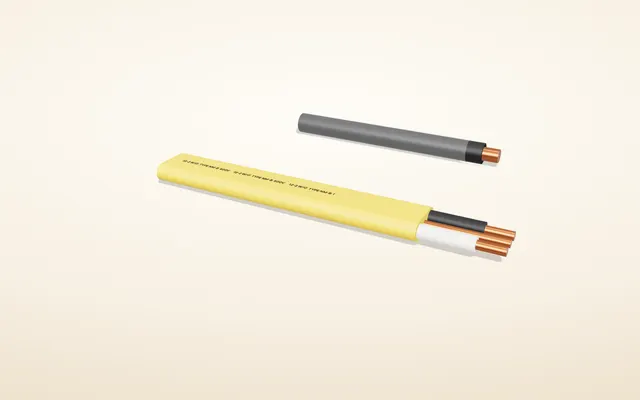 Course 15
Electrical
Wire colors and the panel; grounding, GFCI, surge protection and EV charging; generators; knob-and-tube to today.
7 chapters · 51 3D scenes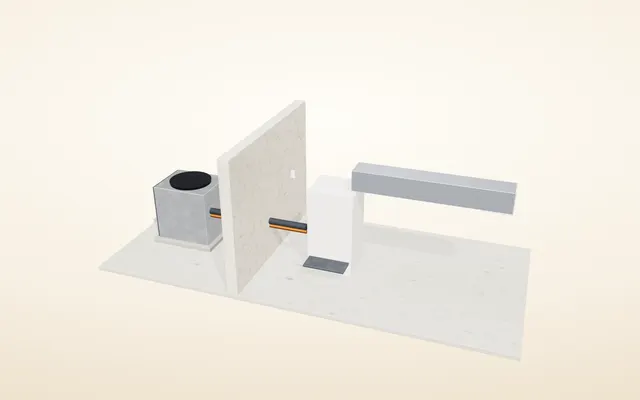 Course 16
Heating, cooling and ventilation
Heat pumps, ducts and returns; radiant and ductless; make-up air, wine rooms, humidity and smoke-day filters.
7 chapters · 37 3D scenes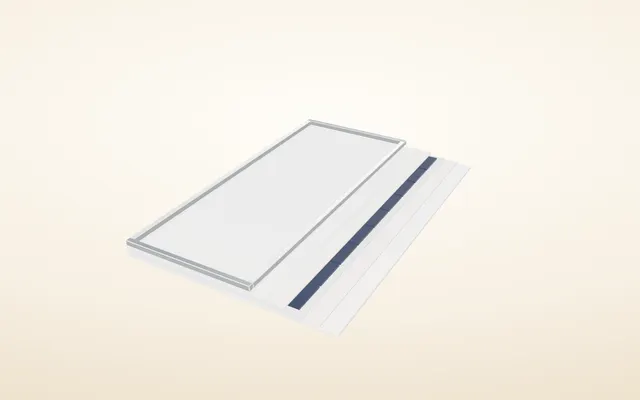 Course 17New
Solar, batteries and EV
Panels, inverters and batteries; tile and standing-seam mounts; backup power and the 2020 solar mandate.
7 chapters · 30 3D scenes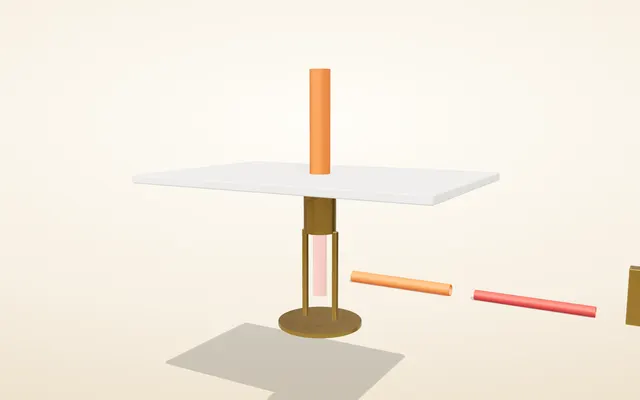 Course 18New
Fire sprinklers and wildfire hardening
Sprinkler heads, the riser and fire access; ember-safe vents, eaves and decks; the first five feet.
7 chapters · 30 3D scenes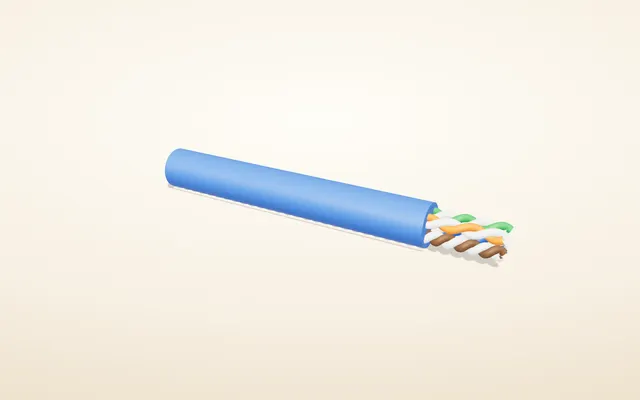 Course 19New
Low voltage and smart home
Twisted pairs and the media closet; Wi-Fi, security and gates; home theater and elevators.
7 chapters · 31 3D scenesThe surfaces you live with
 Course 20
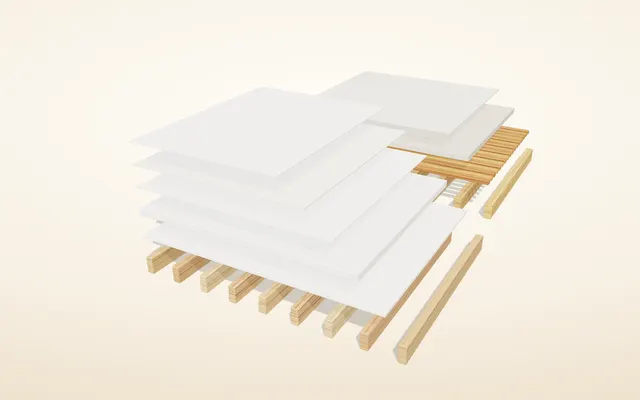
Drywall and plaster
Levels 0 to 5, quiet walls and arches; vaults, cornices and trimless reveals; Venetian plaster.
7 chapters · 34 3D scenes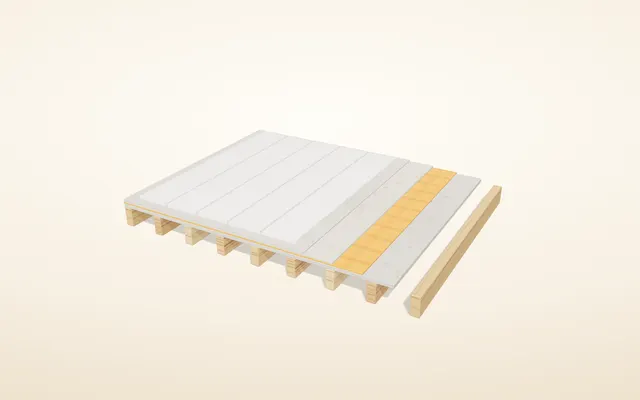 Course 21
Tile and waterproofing
Membranes, layout and grout; curbless and steam showers; large tile, porcelain slabs and 1920s art tile.
7 chapters · 35 3D scenes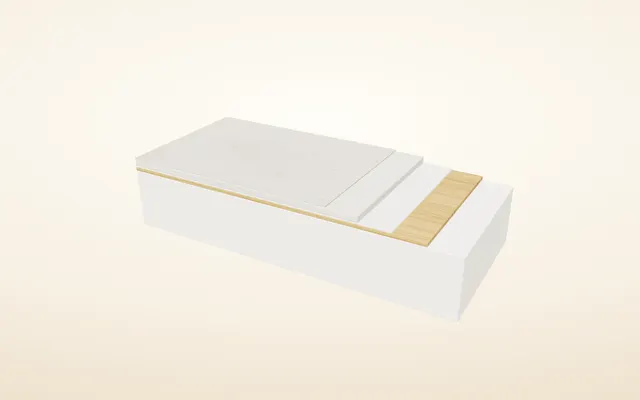 Course 22New
Countertops and stone fabrication
Granite, marble, quartzite and quartz; sinks, waterfall islands and book-matched slabs; outdoor counters.
7 chapters · 32 3D scenes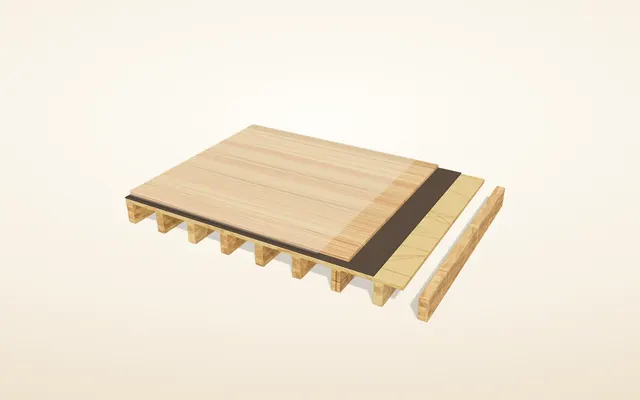 Course 23
Floors and paint
Wood, stone and parquet floors; slab moisture, wide planks and oil finishes; primers, paint and wallcovering.
7 chapters · 36 3D scenes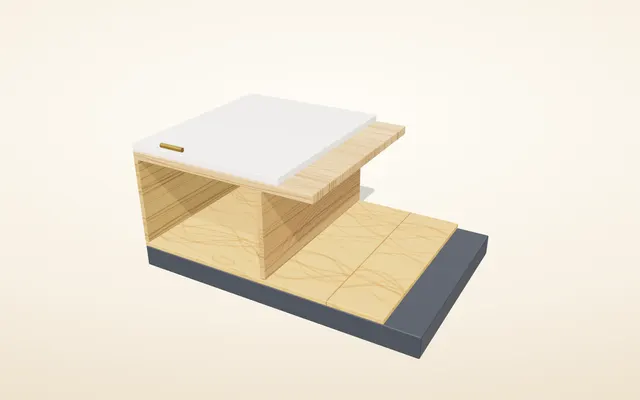 Course 24
Cabinetry and millwork
Boxes, doors and hardware; inset and curved cabinets, shop finishes and cut lists; closets and wine racking.
7 chapters · 36 3D scenes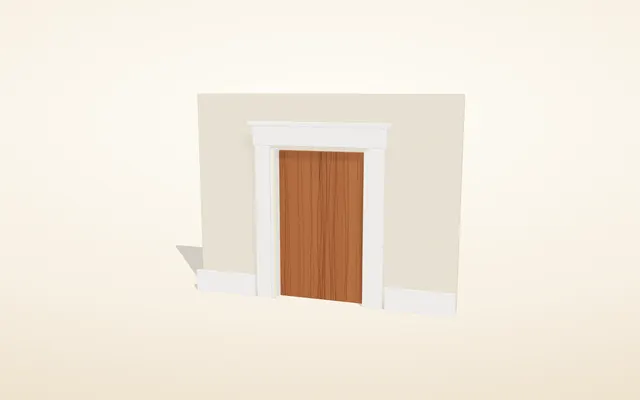 Course 25
Finish carpentry
Casing, base and crown as a classical order; stairs, paneled rooms, coffers and hidden doors; a century of trim.
7 chapters · 40 3D scenes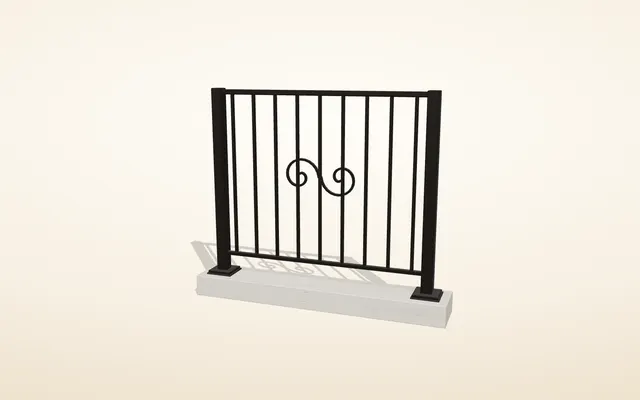 Course 26New
Ironwork and metal
Wrought iron and steel; railings, curved stairs and guards; forged lanterns, gates and coastal coatings.
7 chapters · 30 3D scenesOutside, and the whole job
 Course 27New
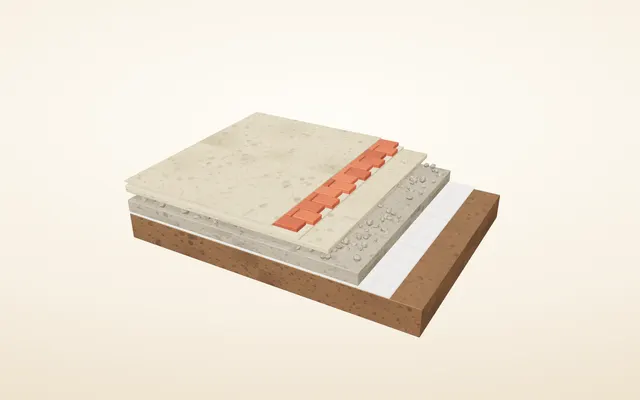
Hardscape, drainage and landscape
Pavers, drains and dry wells; pools, fountains, rain tanks and granite paths; trees, lighting and irrigation.
7 chapters · 42 3D scenes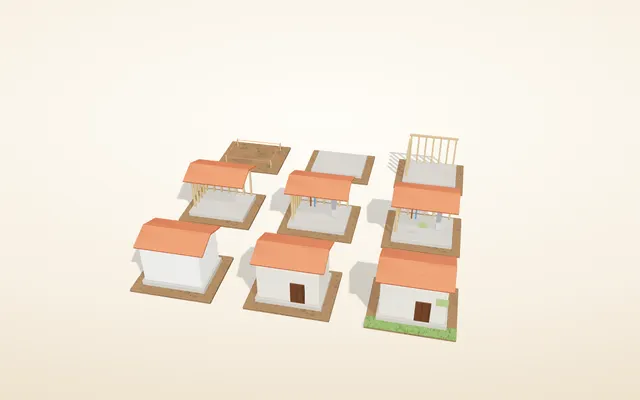 Course 28
Construction project management
Seven phases and permits by town; price, schedule and change orders; mockups, tolerances, liens and closeout.
7 chapters · 49 3D scenesHigh-end work, lesson by lesson.
What sets a Montecito or Santa Barbara estate apart from an ordinary house, taken apart in 3D: stone floors, steam rooms, paneled rooms, wine rooms, slate and standing-seam roofs, basements, fountains and the paperwork that keeps a fine job honest.
Architecture
Engineering for builders
Stiff floors for stone · Heavy roofs
Site and excavation
Foundations and concrete
Under the slab: rock and a vapor retarder
Masonry and stone
Cast stone and carved surrounds · Outdoor fireplaces
Roofing
Slate roofs · Standing seam: copper and zinc
Windows, doors and weatherproofing
Pivot doors · Hidden screens for big openings · Setting big glass
Stucco and exterior plaster
Rounded corners and deep returns
Insulation and air sealing
Plumbing
Leak detection and automatic shutoff · Water treatment · Freestanding tubs · Laundry to landscape
Electrical
Standby generators · Surge protection at the service
Heating, cooling and ventilation
Big range hoods need make-up air · Wine rooms · Humidity for art, wood and instruments
Solar, batteries and EV
Drywall and plaster
Trimless lights and shadow reveals · Plaster cornices and ornament · Barrel vaults and groin vaults
Tile and waterproofing
Steam showers · Flat enough for big tile · Thin porcelain slabs
Countertops and stone fabrication
Waterfall islands and mitered edges · Outdoor counters
Floors and paint
Limestone and stone floors · Wide planks and oil finishes · Parquet panels
Cabinetry and millwork
Inset cabinets · Finishes sprayed in the shop · Wine racking
Finish carpentry
Coffered ceilings · Paneled rooms · Hidden doors · Flush base and reveals
Ironwork and metal
Forged lanterns and hardware · Curved and spiral stair rails
Hardscape, drainage and landscape
Courtyard fountains · Rainwater tanks · Specimen trees · Pool safety: two of seven · Decomposed granite paths
Construction project management
Submittals, samples and mockups · Protecting finished work · Tolerances: what flat and level mean
From our own shop and office
Curved cabinet ends · Cutting diagrams · Trim is a classical order · Built-up cornices from stock parts · Test cuts and the five-cut check · Layout habits from Japanese joinery · Getting paid: notices and liens · Estimating from finished jobs · Hold points · Water gets one chance · Neighbors and narrow lanes · The weekly meeting and the monthly report · Bad news, early · Discretion is part of the scope · Hand the house to the people who will run it
Field practice, lesson by lesson.
The everyday habits of a good South Coast job, each taken apart in 3D: water, weather, inspections, tolerances and the records that settle questions later.
Architecture
Compression and release · The courtyard house · Gable, hip and shed
Engineering for builders
Diaphragms and collectors · Wind on the coast · Deferred submittals
Building in Santa Barbara
Work in the street · Trees and permits
Site and excavation
Dewatering a wet excavation · Count the trucks · Compaction you can prove · Private lines too
Foundations and concrete
What goes in before the pour · Post-tensioned slabs · Hot, dry and windy pours · Cylinders and the 28-day test
Masonry and stone
White bloom on brick and stone · Arches and lintels · Repairing adobe · Cleaning new masonry · Weeps in veneer
Framing
Crown up, layout from one end · Dry and straight before close-in · Fill every hanger hole
Demolition and hazardous materials
Sort it, weigh it, prove it · Silica: cut it wet
Roofing
Dry in by dark · Walking on tile · Crickets behind chimneys
Windows, doors and weatherproofing
Install it the way it was tested · Read the window label · Adjusting a door
Stucco and exterior plaster
Plaster and the weather · Where the joints go · Sealant joints that last
Insulation and air sealing
Holes in the ceiling · The attic edge · Foam needs a cover
Plumbing
Pressure from the street · Cleanouts you can reach · Water hammer · Scald protection
Electrical
Label the panel · The load calculation · Tamper-resistant receptacles · When the wall gets thicker
Heating, cooling and ventilation
Pull a vacuum · J, S and D · Condensate goes somewhere · Fans go outside
Solar, batteries and EV
Shade is the enemy · Wait for permission to operate · Sizing an EV circuit
Fire sprinklers and wildfire hardening
Ember-resistant vents · The garage door · Never paint a sprinkler head
Low voltage and smart home
Label it and leave a way in · Ground it where it comes in
Drywall and plaster
Corner bead · Screws and pops · Paper tape or mesh · Ceilings first
Tile and waterproofing
Flat tile, from flat floors · Movement joints · Tile over a wood floor · Grout haze
Countertops and stone fabrication
Where the seams go · Templating
Floors and paint
Leave room to grow · Nosings for engineered floors · Stain samples on the real floor · Keep a wet edge
Cabinetry and millwork
Hardware, drilled once · Hanging the uppers · Under-cabinet lighting · Tall cabinets stay put
Finish carpentry
The right nail · Sharp · Glue every miter
Ironwork and metal
Hot work on a job site · Measure after the finishes
Hardscape, drainage and landscape
Pavers stay where they are put · Dry wells · Root barriers · Mulch, and where not
Construction project management
The daily log · The job card · The preconstruction meeting · The three-week look-ahead · Owner-furnished items · Rain days in the schedule
The coast you build on
The railroad arrives · 1942: shells at Ellwood · Lotusland and the estate gardens · Painted Cave · The sand moves east · Bluffs retreat · The islands were one · The kelp forest · King tides and a higher sea · Isla Vista · The Funk Zone and the waterfront · The Riviera · Mission Canyon and the Mission waterworks · El Paseo: the street in Spain · The Mesa lighthouse · The Goleta Slough and the airport · The Carpinteria Salt Marsh · Hot Springs Canyon · Old Spanish Days
The 100 trades on a South Coast house.
Every skilled trade and design role that touches a house here, from the surveyor to the final clean, with the California license class where one applies and the course that teaches it. The words they use, in English and Spanish, are on one page.
Design and the rules
- ArchitectDesigns the house and leads the drawings through design review and permits.
- Architectural designer and drafterDraws plans and details for smaller projects and for the architect.
- Interior designerSelects finishes, fixtures, lighting and furniture; details millwork with the cabinetmaker.
- Landscape architectDesigns grading, planting, irrigation and hardscape; often required by design review.
- Land surveyorMaps the lot, sets corners, stakes the house and story poles.
- Geotechnical engineerTests the soil and writes the report that decides the foundation.
- Structural engineerSizes beams, shear walls, frames and footings, and stamps the structural set.
- Civil engineerDesigns grading, drainage, driveways and utility connections.
- Energy (Title 24) consultantRuns the energy model and the compliance forms the permit needs.
- Fire sprinkler designerLays out heads and pipe and runs the hydraulic calculation.
- ArboristReports on protected oaks and sets root-zone protection.
- Permit expediter and plannerMoves the project through design review, plan check and district approvals.
- Special inspectorIndependent inspection of welds, high-strength concrete and anchors.
The ground and the bones
- Demolition C-21Takes out the old house or part of it, sorting for recycling.
- Asbestos abatement C-22Removes asbestos found in older plaster, flooring, pipe wrap and siding.
- Lead-safe renovationContains and cleans lead paint dust in pre-1978 houses.
- Excavation and grading C-12Digs foundations, cuts and fills the site, and compacts the pad.
- ShoringHolds back excavations next to neighbors, slopes and streets.
- Drilling (caissons)Drills piers for hillside and poor-soil foundations.
- Concrete C-8Forms, places and finishes footings, slabs, walls and flatwork.
- Reinforcing steel C-50Bends and ties rebar to the structural drawings.
- Waterproofing (below grade)Membranes and drainboard on basement and retaining walls.
- Masonry (block and brick) C-29Block walls, brick and chimneys.
- Stone masonry C-29Sandstone walls, veneer and the dry-stack work of the South Coast.
- Framing and rough carpentry C-5Builds the wood structure: walls, floors, roof and shear walls.
- Structural steel C-51Erects steel moment frames, beams and posts.
- Welding C-60Field and shop welds for steel, railings and gates.
- Seismic retrofitBolts older houses to their foundations and braces cripple walls.
- Building moving and raising C-21Lifts houses for new foundations or flood elevation.
The shell
- Roofing (tile) C-39Clay tile roofs, underlayment and flashing.
- Roofing (shingle and metal) C-39Composition, standing seam and other roofs.
- Sheet metal and copper C-43Gutters, downspouts, flashings and copper work.
- Windows and doors installation C-17Sets windows and exterior doors and flashes them into the wall.
- Glazing and glass C-17Glass walls, shower glass, mirrors and skylights.
- Steel windows and doorsThe slim steel casements of Spanish and Mediterranean houses.
- Garage doorsSectional and custom wood carriage doors and openers.
- Lath and plaster (stucco) C-35Three-coat stucco and the smooth hand-troweled finishes of the South Coast.
- Siding and exterior trimWood, fiber cement and board-and-batten cladding.
- Insulation C-2Batts, blown, spray foam and rigid insulation.
- Air sealing and building performanceBlower-door tests and sealing to meet Title 24.
- Wildfire hardeningEmber-resistant vents, Class A roofs and ignition-resistant details.
- Deck and balcony waterproofingTraffic membranes over living space.
The systems
- Plumbing C-36Water, drain, vent and gas piping and fixtures.
- Gas piping C-36Gas lines to ranges, fireplaces and generators.
- Septic systems C-42Septic tanks and leach fields on lots without sewer.
- Sewer lateral C-42The pipe from the house to the street sewer, often replaced on older lots.
- Water treatment C-55Softeners and filtration.
- Well drilling C-57Private wells on some estate and rural lots.
- Electrical C-10Service, panels, wiring, devices and lighting.
- Generators and backup power C-10Standby generators and transfer switches.
- Solar C-46Rooftop and ground-mount photovoltaic systems.
- Battery storage C-10Home batteries and backup panels.
- EV charging C-10Chargers and the circuits behind them.
- HVAC (heating and cooling) C-20Heat pumps, furnaces, ducts and controls.
- Radiant floor heating C-4Hydronic and electric heat under tile and wood.
- Ventilation and air quality C-20Bath, kitchen and whole-house ventilation.
- Fire sprinklers C-16Residential sprinkler pipe and heads.
- Low voltage and networking C-7Data, Wi-Fi, TV and speaker wiring.
- Security and access control C-28Alarms, cameras, gate operators and smart locks.
- Audio-visual and home theater C-7Speakers, screens and media rooms.
- Smart home and controls C-7Lighting, shade and climate control systems.
- Elevators and lifts C-11Residential elevators and stair lifts.
The surfaces
- Drywall C-9Hangs and finishes gypsum board.
- Interior plaster C-35Veneer plaster, lime and Venetian finishes.
- Acoustical C-2Sound control in walls, floors and media rooms.
- Tile setting C-54Floors, showers, backsplashes and handmade tile.
- Shower waterproofing C-54Pans and membranes under tile.
- Countertop fabricationTemplates, cuts and installs stone and quartz tops.
- Hardwood flooring C-15Installs, sands and finishes wood floors.
- Resilient and carpet flooring C-15Vinyl, linoleum and carpet.
- Painting C-33Interior and exterior paint and stain.
- Wood finishing C-33Hand-applied finishes on doors, beams and millwork.
- Wallcovering C-33Wallpaper and fabric walls.
- Cabinetmaking C-6Builds custom cabinets in the shop.
- Cabinet installation C-6Sets, scribes and levels cabinets.
- Architectural millwork C-6Paneling, built-ins, libraries and stair parts.
- Finish carpentry C-6Doors, casing, base, crown, wainscot and built-ins.
- Stair building C-6Treads, risers, stringers and rails.
- Door hardware C-28Hinges, locks and pulls fitted to the doors.
- Closet systems C-6Custom closets and storage.
- Ornamental iron C-23Railings, gates, grilles and lanterns.
- Blacksmithing and forging C-23Hand-forged hardware and iron details.
- Fireplaces and chimneys C-29Masonry fireplaces, liners and gas inserts.
- Appliance installationRanges, ovens, refrigeration and ventilation hoods.
- Window coveringsShades, shutters and motorized drapery.
Outside and the whole job
- Landscaping and irrigation C-27Planting, drip irrigation and lawns.
- Hardscape and pavers C-27Patios, walks and driveways in stone, brick and pavers.
- Drainage C-27French drains, catch basins and dry wells.
- Retaining walls C-29Block, concrete and stone walls that hold back soil.
- Fencing and gates C-13Wood, iron and wire fences.
- Paving and asphalt C-12Driveways and long private roads.
- Pools and spas C-53Gunite pools, spas and their equipment.
- Outdoor kitchens and fire featuresBarbecues, fire pits and outdoor fireplaces.
- Tree care C-49Pruning, removal and protection of trees.
- Exterior lighting C-10Path, landscape and dark-sky lighting.
- SuperintendentRuns the site day to day: schedule, safety, quality and the trades.
- Project managerBudget, contracts, change orders and the owner relationship.
- EstimatorPrices the drawings line by line with trade bids.
- Safety and SWPPPFall protection, site safety and storm-water controls.
- Final cleaningConstruction clean and the final clean before move-in.
For owners
Start with the course for the work you are planning. The last chapter of each one is about your house: what we usually find when we open a wall in a house of your age, what to decide early, and what it costs to get wrong. Then see renovations, additions, kitchens and trade secrets.
For our crew
The courses here are the shared foundation. The private set goes further: fifteen 3D job sites to walk station by station, with lesson plans, guides, the math and the tools, plus the daily drill.
For architects
How we build the details you draw, in the order we build them. Working with AMN and The Montecito Standard, our field guide to Montecito architecture and fine woodwork.
Questions people ask.
Is the AMN Trade School free?
Yes. Every course is free to read and to turn in 3D, with no sign-up. It is the same material we use to train our own crew, published so owners can see how their house is built and what good work looks like.
Who is the trade school for?
Three readers: apprentices and tradespeople learning residential work on the Santa Barbara South Coast; owners planning a renovation, addition or new house who want to understand what they are paying for; and architects and designers who want to know how we build what they draw.
What does each course cover?
Each trade course follows the same arc: what the work is made of, the kinds you will meet and how to tell them apart, how the material is made, how it is installed well, a hundred years of how it was done in Santa Barbara houses, and what it all means for your house today.
Why does Santa Barbara need its own trade school?
Because the houses here are different. The 1925 earthquake made Santa Barbara rebuild in the Spanish Colonial Revival style under one of the first architectural review boards in the country, so many houses have three-coat stucco, clay tile roofs and sandstone walls. The coast, the Coastal Zone, the fire hazard zones in the foothills and the debris flows of January 2018 all change how a house here is built.
Can AMN Construction do this work on my house?
Yes. AMN is a licensed general contractor (CSLB #802739, Class B, since 2002) and builds finish carpentry, renovations, additions, custom residences and accessory dwellings from Goleta to Carpinteria. Call Matt Newman at 805 886 0988.
What license does a plumber need in California?
A California contractor license in the C-36 class (plumbing, gas piping), from the Contractors State License Board, or the work can be part of a larger job run by a general building (B) contractor. A license is needed for work of $1,000 or more in labor and materials, any work that needs a permit, or any job where the worker hires help. Check any license at cslb.ca.gov. The 100-trade directory lists the class for every trade.
What license does an electrician need in California?
A California contractor license in the C-10 class (electrical, generators and backup power, battery storage), from the Contractors State License Board, or the work can be part of a larger job run by a general building (B) contractor. A license is needed for work of $1,000 or more in labor and materials, any work that needs a permit, or any job where the worker hires help. Check any license at cslb.ca.gov. The 100-trade directory lists the class for every trade.
What license does a tile setter need in California?
A California contractor license in the C-54 class (tile setting, shower waterproofing), from the Contractors State License Board, or the work can be part of a larger job run by a general building (B) contractor. A license is needed for work of $1,000 or more in labor and materials, any work that needs a permit, or any job where the worker hires help. Check any license at cslb.ca.gov. The 100-trade directory lists the class for every trade.
What license does a finish carpenter need in California?
A California contractor license in the C-6 class (cabinetmaking, cabinet installation, architectural millwork), from the Contractors State License Board, or the work can be part of a larger job run by a general building (B) contractor. A license is needed for work of $1,000 or more in labor and materials, any work that needs a permit, or any job where the worker hires help. Check any license at cslb.ca.gov. The 100-trade directory lists the class for every trade.
What license does a stucco contractor need in California?
A California contractor license in the C-35 class (lath and plaster (stucco), interior plaster), from the Contractors State License Board, or the work can be part of a larger job run by a general building (B) contractor. A license is needed for work of $1,000 or more in labor and materials, any work that needs a permit, or any job where the worker hires help. Check any license at cslb.ca.gov. The 100-trade directory lists the class for every trade.